
Death & Design
Architecture's Grave History with Death Part 1

Death in the Ancient World and Middle Ages
“Death”
What crosses your mind when you see or hear that word?
Does it remind you of your mortality? That one day you’ll cease to exist? Or do you see it as something to rebuke? Perhaps you believe it is the conclusion of one life and the beginning of another? Or maybe you’re part of a select few that have a certain indifference towards it and feel that it is a natural part of life; things die, people die; life moves on?
Our perception of death is often influenced by personal experiences. For example, the death of a loved one or a young child typically elicits a different reaction from the death of a dictator, or even an old person who we assume has lived life to the fullest. The circumstances leading up to these deaths also affect how we feel about the deaths themselves. However, no matter how different our perceptions of death are; one thing is certain, death is inevitable.
The built environment is a social and cultural product. Buildings result from social needs and these needs are shaped by cultural values; these values could be religious, economic or societal. A religious society for example would be littered with temples dedicated to their gods, while a lack of grand structures is more likely to be a feature of an egalitarian society. A change in a people’s ideology would be evident in the shift in Architecture style or urban planning of the city. The immortalization of these values makes Architecture a good tool to study man’s constantly evolving relationship with death.
Death in Ancient times
Ancient Egypt
It would be difficult to find other people in the ancient world that celebrated death or the passing onto the afterlife on a grander scale than the Ancient Egyptians. Mummification, mastabas and the Great pyramids are all results of their belief in the afterlife.
The mastaba was the first tomb structure the ancient Egyptians developed and it was created from bricks made with the soil that was sourced along the Nile. The mastabas, which rose to about 9m high, were oriented North-South, because the Egyptians believed that was essential for passage into the afterlife. A major feature of the mastaba was an above-ground structure equipped with a false door that allowed priests and family to bring food and other offerings for the soul of the deceased to continue their existence in the afterlife.
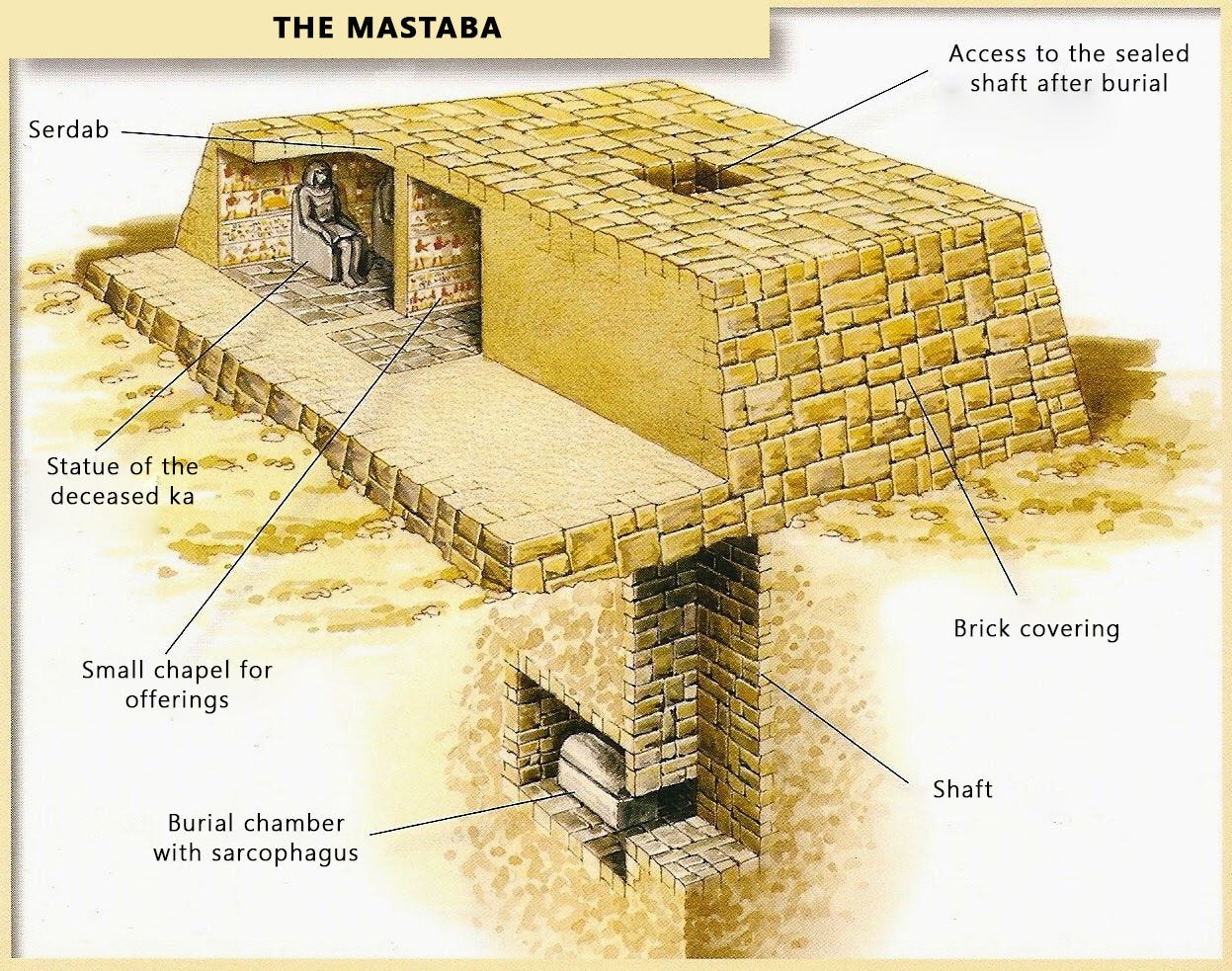
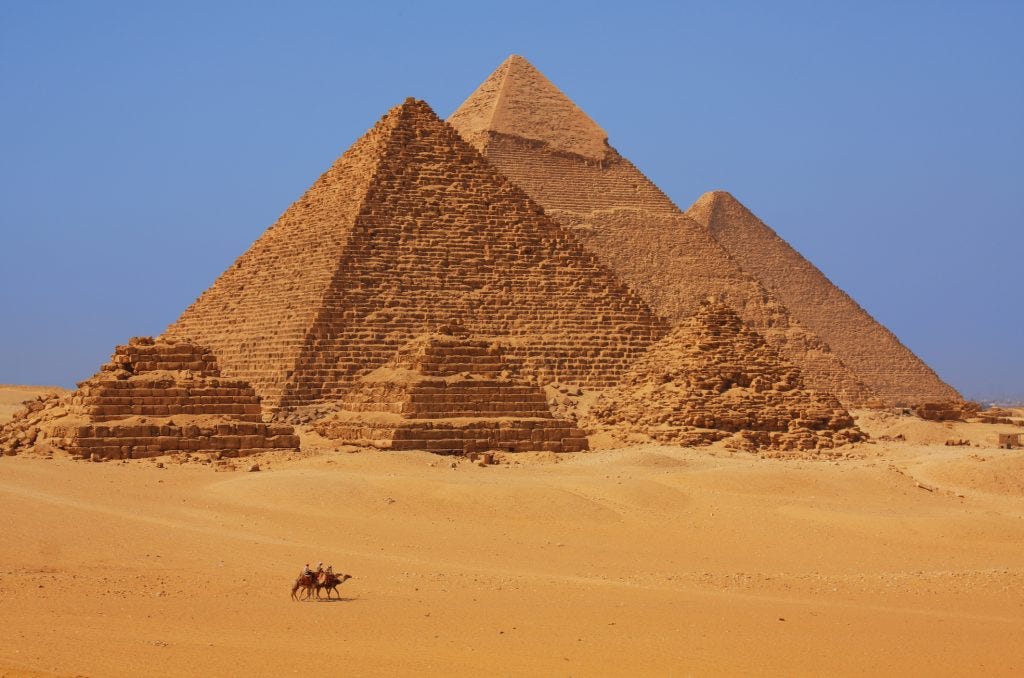
In the 3rd dynasty, when pharaohs started to be buried in pyramids rather than mastabas, regular people and elites were still buried in mastabas. The ancient Egyptians had cities or locations away from the major cities where these mastabas and pyramids were located, similar to modern-day cemeteries. Ancient cities such as Abydos and Saqqara were the resting place of many people.
The shape of Egyptian pyramids is thought to represent the primordial mound from which the Egyptians believed the earth was created. The shape of a pyramid is also thought to be representative of the descending rays of the sun. While it is generally believed that pyramids were burial monuments, there are alternative theories; one of them is that they were designed as some sort of resurrection machine.
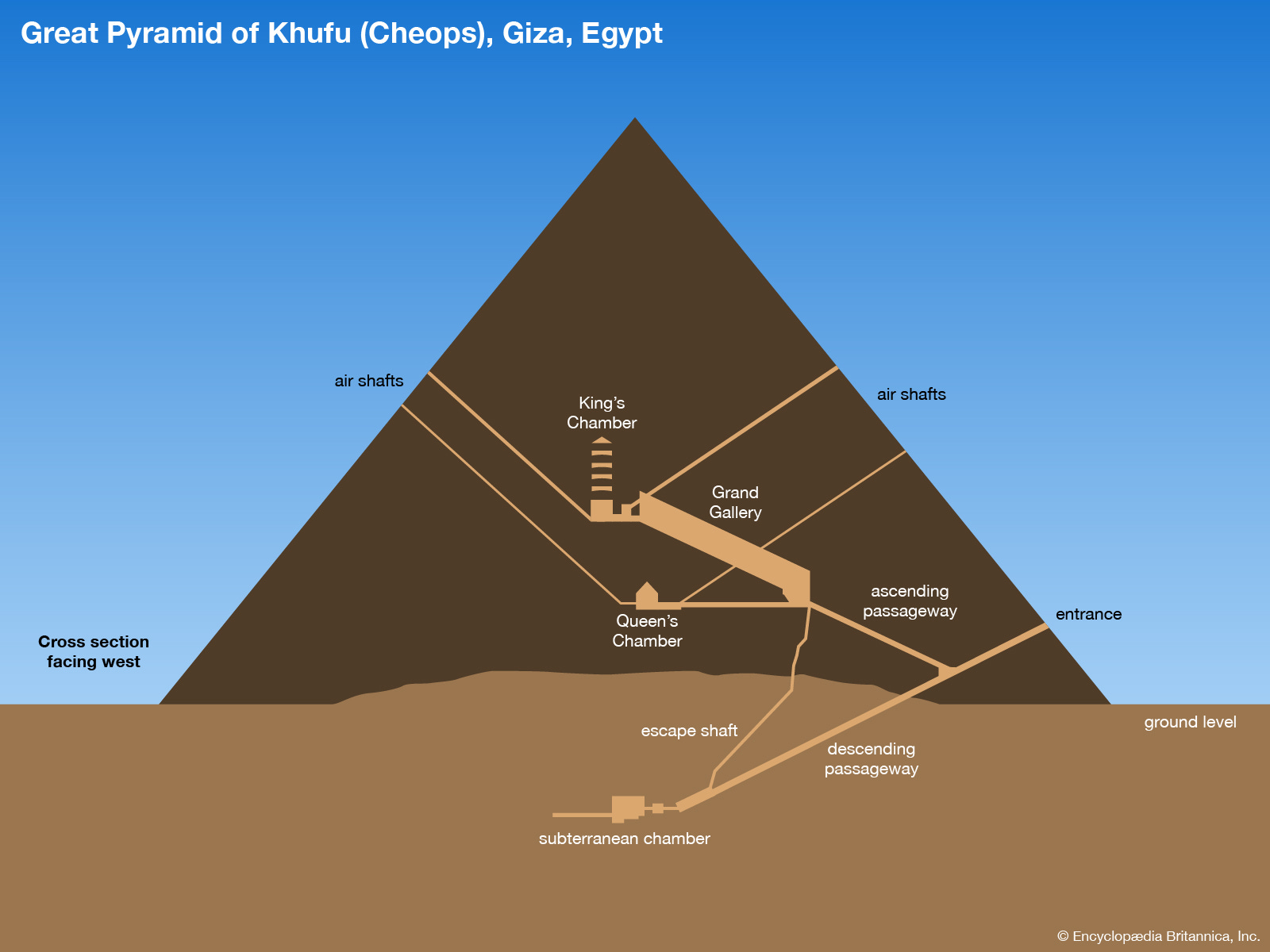
The Egyptians claimed that the physical portal to heaven was the dark region of the night sky in which the stars seem to revolve. One of the narrow shafts that extend across the entire body of the Great Pyramid from the main burial chamber points directly toward the centre part of the sky; suggests the pyramid may have been designed to serve as a means to magically launch the deceased pharaoh's soul directly into the abode of the gods.
Ancient Mesopotamia
In ancient Mesopotamia (geographically present-day Iraq), there were hardly any structures built to celebrate death or prepare a person for the afterlife. They did have cemeteries but those were majorly done to separate the living from the dead. Death was perceived differently in Mesopotamia, it was seen as something to fear, not to be celebrated or looked forward to; a terrible fate.
According to Mesopotamian tradition, man was created from clay mixed with the blood of a sacrificed god. Unlike in ancient Egypt, the spirits of the dead here suffered a dismal afterlife eating only dust and clay in a place with no drinkable water. They survived only on the food and offerings of their descendants.
There was also the fear of the dead wreaking havoc on the land of the living if they were not given a proper burial. Many people were buried in cemeteries far from the main city to prevent the spirits from escaping and causing trouble. However, there were a few examples of people buried in homes; even stranger, some babies were buried in cooking pots in their homes.
Ancient Greece and Rome
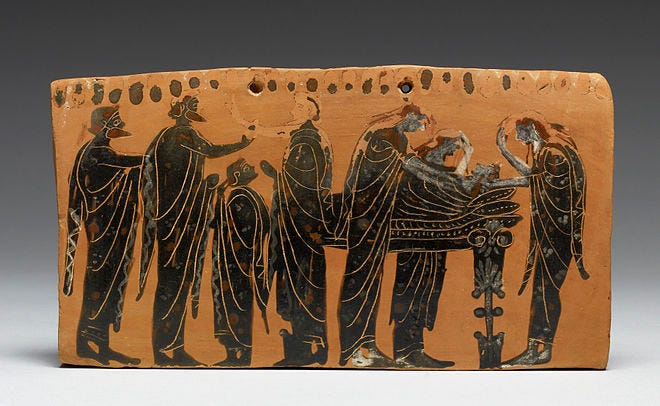
The Greeks and Romans believed in the afterlife too, although to a different degree than the Egyptians and Mesopotamians. The Greeks believed that at the moment of death, the psyche, the spirit of the dead left like a puff of wind and therefore, arrangements for a smooth transition to the afterlife should be made. These arrangements consisted of 3 parts: Prothesis (laying out the body), Ekphora (funeral procession) and Perideipnon(post-funeral party).
During prothesis, the body was anointed in oil and wrapped in a shroud, and a coin was placed under the tongue to be given to Charon, the ferryman of the River Styx, the boundary between our world and the underworld. The body was then placed on a platform for the family to mourn and pay their respects.
The interesting thing about the relationship of the Greeks and Romans with their depiction of the afterlife and the elaborate mythologies around them is that they do not explain how death came to be and the rituals surrounding them. There have been numerous attempts at explaining death and the afterlife, some more popular than others but none seem to be generally agreed upon. According to Homer (8th century BC author), the underworld is a grey dark place run by Hades and his wife Persephone where countless drifting crowds of shadowy figures resided. These shadowy figures were the spirits of those who had died. The underworld was neither a happy nor an attractive place. The ghost of the great hero Achilles confessed to Odysseus that he’d rather be a poor serf on earth than Lord of the dead -- further intensifying the Greeks’ fear of death.
Plato, however, claimed that a person’s place in the underworld was determined by their acts on earth, and if they did good, they would have a favourable reception in the underworld and vice versa. Plato’s account, however, did little to assuage the fears of the Greeks about death and the underworld.
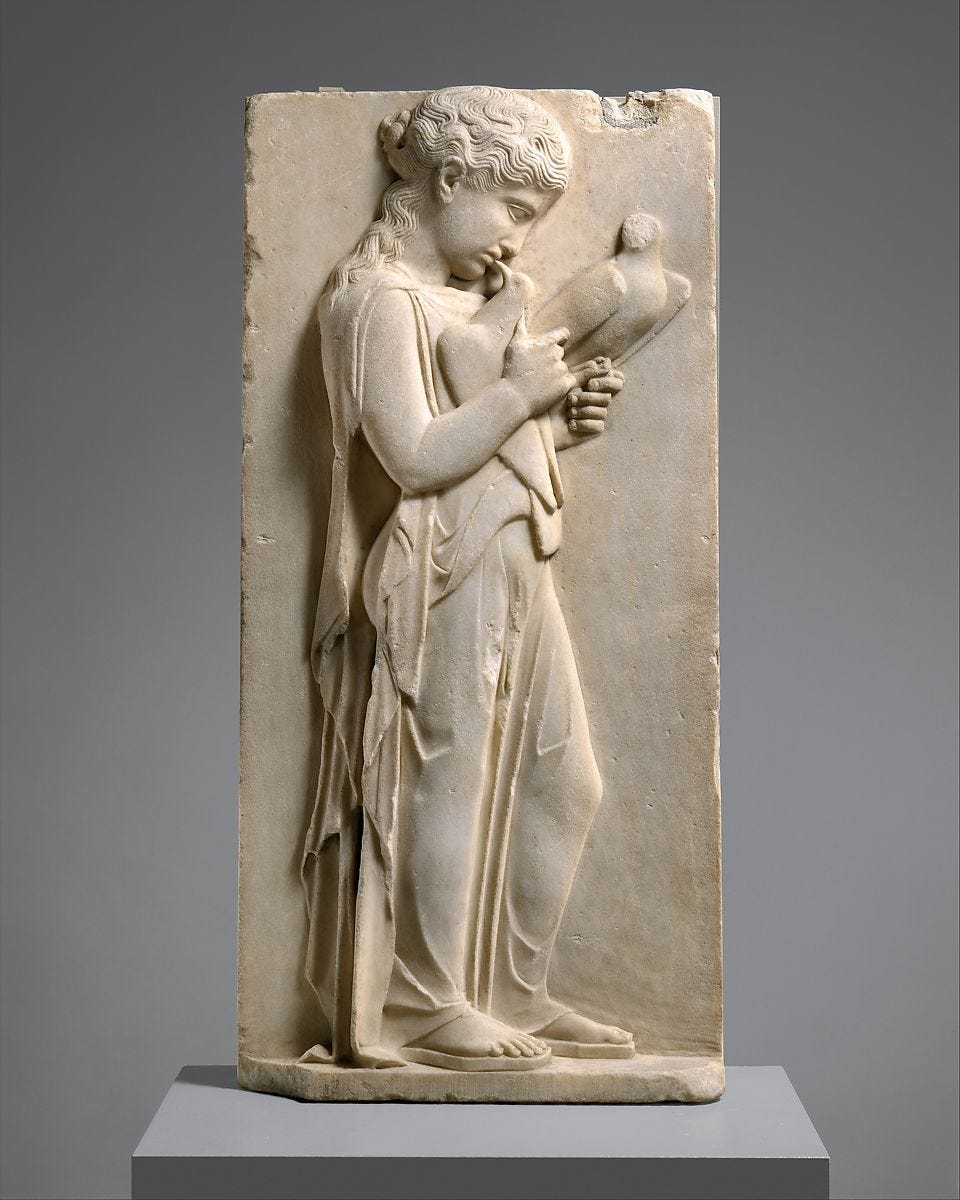
Nevertheless, the fear of death did not stop the Greeks from building monuments and structures to mark a person’s life. The structures were built in memoriam of the people, so that gifts and offerings could be offered to them because the Greeks believed the immortality of the dead depended on the remembrance of the living. These structures were often well decorated and beautiful. In fact, most lavish funerary monuments were built in the 6th century by Aristocratic families of Attica.
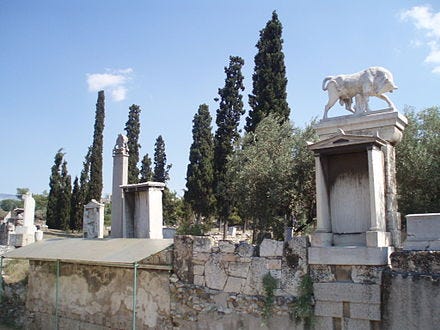
The internment of the bodies during Ekphora involved the Greeks being buried in cemeteries with earth mounds marked by statues, stelae etc. Many times, the cemeteries lined the roads leading into the city. At the end of the 5th century, Athenian families began burying their dead in simple stone sarcophagi placed in the ground.
The Romans continued many of the Greek traditions just at a much larger scale.
East Asian
Belief in the afterlife was a theme central to the Ancient World and East Asians were no different. Like many African cultures and religions, East Asian culture is centred around ancestors. The spirits of the deceased were believed to still wield influence on the day-to-day lives of the living and therefore there was an emphasis on appeasing these spirits lest they become vengeful.
Buddhism was the primary religion in most of East Asia and as a result, the teachings of Buddha were whispered into the ear of the deceased to help guide them into a peaceful death. After death, the body would be bathed, placed in a coffin with burial items like gold, silver, flowers etc. for inhumation or cremation.
Graves in China generally look like earth mounds and their locations are determined by “Fengshui,” an ancient art related to the law and order of the universe and the power of nature. Some graves are planted with trees to show the continuation of life.
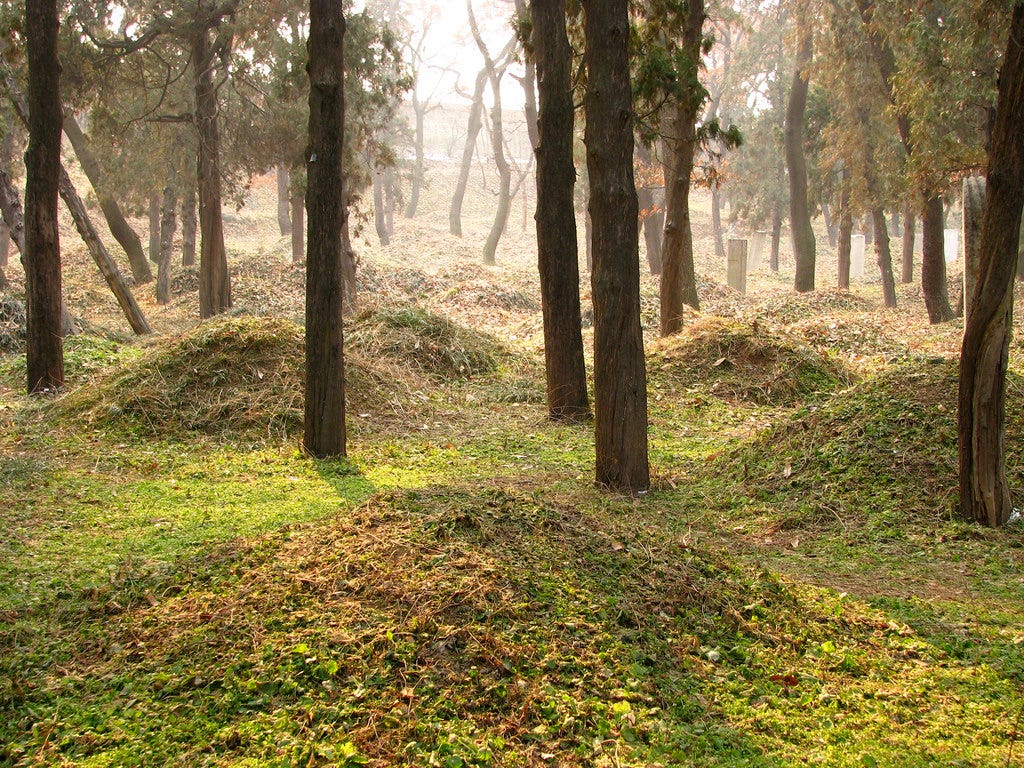
“According to Fengshui theory on burial, when the dead person is buried underground, energy can form because of the combination of the dead spirit and the grave location. Then the energy can influence the whole family. For an imperial mausoleum, the location can influence the country’s fate. Almost all imperial mausoleums were built by mountains and rivers, based on really strict and complicated Fengshui theory, which is impossible to describe thoroughly in several lines.”
The Fengshui system was developed based on the elements of mathematics, geology, astronomy, astrology, physics, philosophy, psychology and intuition. Fengshui is widely used in traditional Chinese architecture in the site selection process and in determining the layout of buildings, courtyards, and even cities.
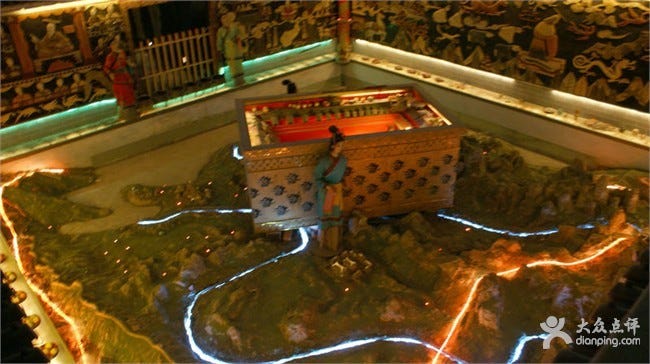
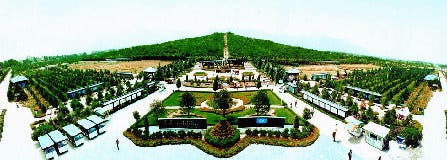
The largest underground mausoleum in the world is in China, the Mausoleum of Emperor Qin – the first sovereign emperor of China. It covers an area of 56 sq km. He prepared for his death by commissioning the Mausoleum, the treasures of which began to come to light about 2100 years after his death. Its description can be found in the Records of the Grand Historian, which was written by the Han dynasty historian, Sima Qian. According to this source, Qin Shi Huang’s tomb contained ‘palaces and scenic towers for a hundred officials, as well as numerous rare artefacts and treasures.
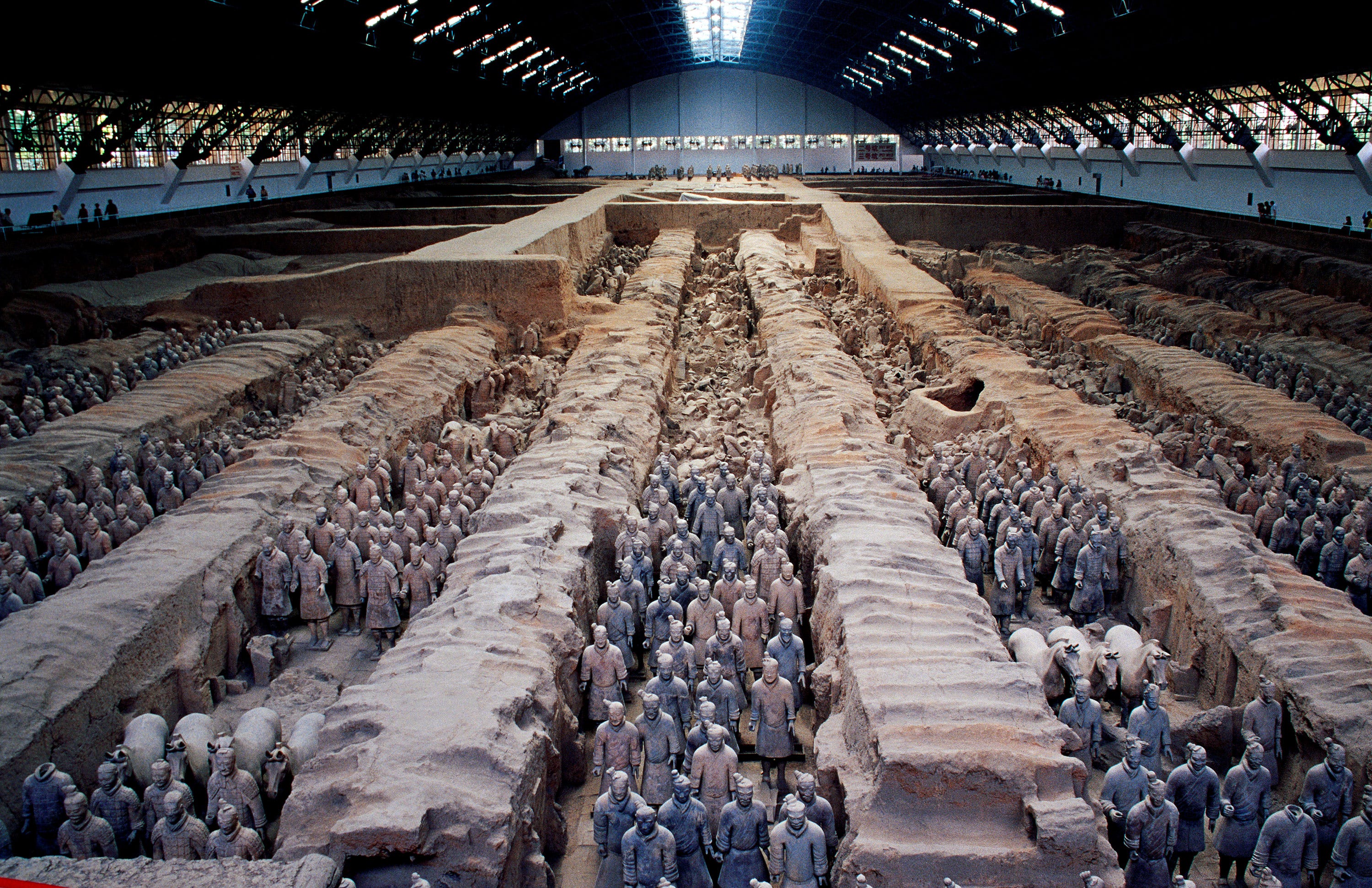
Also, the two major rivers of China, the Yangtze and the Yellow River were simulated in the tomb using mercury. Whilst the rivers and other features of the land were represented on the floor of the tomb, its ceiling was decorated with the heavenly constellations. Thus, Qin Shi Huang could continue to rule over his empire even in the afterlife. To protect the tomb, the emperor’s craftsmen were instructed to make traps which would fire arrows at anyone who entered the tomb.
Early Cambodians believed in reincarnation, and so did the Indonesians, so they had ceremonial funeral pyres with special structures built for the occasion.
In Japan, bodies were placed in barrels or clay pots and buried. However, Japan is an island nation, so funeral processions often carried the deceased on a cart shaped like a boat. In Osaka and other areas of Japan, grand tombs called keyhole mounds house the remains of important people and their possessions.
The Americas
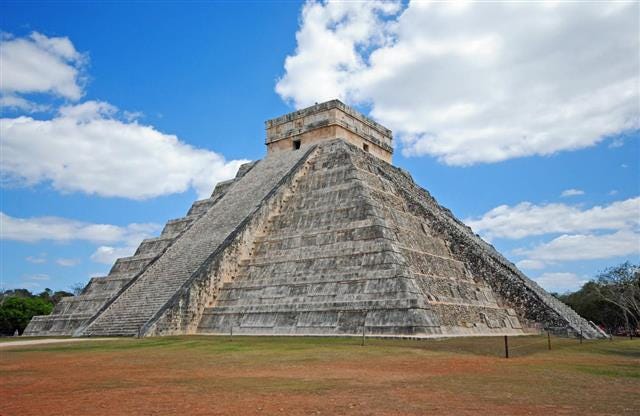
Central America was dominated by the Maya and Aztec cultures and their precursors. Aztecs had beliefs similar to the Egyptians, sending items, livestock, and even slaves to the afterlife with their dead in tombs at the bottom of vertical shafts dug into the ground.
Maya buried their dead under their dwellings, but important people had elaborate tombs with masks, gems, food, and slaves offered with them.
To be continued…